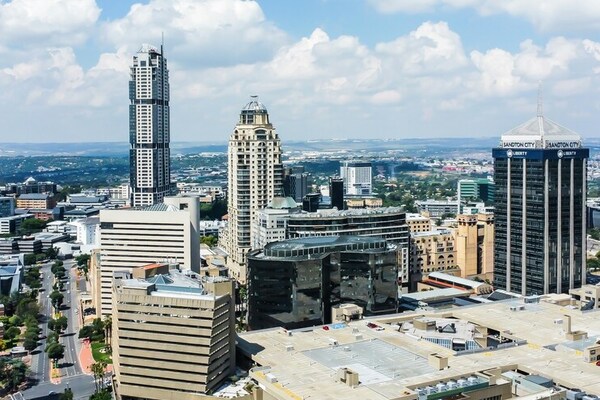
Johannesburg's commercial property market is entering a new cycle in 2026. After years of structural adjustment, the city's commercial real estate sector is showing signs of stabilisation and selective recovery. However, the recovery is far from uniform — different nodes and sectors are performing very differently, creating both opportunities and risks for investors.
This guide provides a comprehensive outlook for Johannesburg's commercial property market, comparing key nodes like Sandton, Rosebank, and Midrand, and analysing the performance of office, retail, and industrial sectors.
Sandton vs Rosebank vs Midrand — A Tale of Three Nodes
Johannesburg's commercial property market is defined by its key business nodes. Each node has distinct characteristics, tenant profiles, and investment dynamics. Understanding these differences is essential for successful investment.
| Node | Character | Vacancy (Office) | Key Sectors | Outlook |
|---|---|---|---|---|
| Sandton | Premium CBD, financial hub | 14–18% | Finance, corporate, legal | Selective recovery — Grade A outperforming |
| Rosebank | Mixed-use, lifestyle precinct | 10–12% | Creative, tech, retail, hospitality | Strong — live-work-play appeal |
| Midrand | Corporate campus, logistics | 8–10% | Corporate HQs, logistics, data centres | Positive — infrastructure investment |
Sandton
Sandton remains Johannesburg's premier business node, but it faces significant challenges. The oversupply of office space has driven vacancy rates up, particularly in grade B and C buildings. However, grade A buildings in prime locations continue to attract tenants, with vacancy rates below 12%. The gap between premium and secondary buildings is widening.
Rosebank
Rosebank has emerged as one of Johannesburg's most attractive commercial nodes. Its mixed-use character, with retail, dining, and residential amenities, makes it highly appealing to tenants seeking a live-work-play environment. Vacancy rates in Rosebank are among the lowest in the city, at 10–12%.
Midrand
Midrand has become a key node for corporate headquarters, logistics, and data centres. Its strategic location between Johannesburg and Pretoria, combined with good infrastructure and modern office parks, has attracted major companies. The node has some of the lowest office vacancy rates in Gauteng.
Office vs Retail vs Industrial Performance
The performance of Johannesburg's commercial property sectors is diverging significantly. Industrial property is the clear outperformer, followed by convenience retail and select office assets.
| Sector | Vacancy Rate | Yield Range | Performance |
|---|---|---|---|
| Industrial | 5–7% | 9.5–11.0% | ⭐⭐⭐⭐⭐ Strong — structural demand |
| Convenience Retail | 6–8% | 9.0–10.0% | ⭐⭐⭐⭐ Good — defensive |
| Regional Malls | 12–16% | 7.5–8.5% | ⭐⭐⭐ Moderate — pressure from e-commerce |
| Grade A Office | 10–12% | 7.0–8.5% | ⭐⭐⭐ Moderate — selective recovery |
| Grade B/C Office | 18–25% | 9.0–10.5% | ⭐⭐ Weak — high vacancy, declining rents |
Vacancy Trends in Johannesburg
Johannesburg's office vacancy rates have stabilised following a post-pandemic spike, but the recovery is uneven. Grade A buildings in prime locations are seeing improving occupancy, while grade B and C buildings continue to struggle. The trend toward flight to quality is accelerating, with tenants upgrading to modern, well-located spaces.
The flight to quality is the dominant trend in Johannesburg's office market. Tenants are leaving secondary buildings for premium grade A space, creating a two-tier market.
Investment Outlook for 2026
Johannesburg's commercial property market offers selective opportunities for investors in 2026. The industrial sector is the clear winner, followed by convenience retail and grade A office in prime nodes like Rosebank and Sandton.
Frequently Asked Questions
Which Johannesburg commercial node offers the best investment opportunity?
Rosebank and Midrand offer the best opportunities, with low vacancy rates and strong tenant demand. Sandton offers selective opportunities for grade A assets.
Is Sandton still a good investment for office property?
Sandton offers opportunities for grade A assets in prime locations. Grade B and C office buildings face significant vacancy pressure and should be approached with caution.
What is driving industrial property demand in Johannesburg?
E-commerce growth, logistics demand, and supply chain modernisation are driving strong demand for industrial property in Johannesburg's key nodes.
What is the outlook for Johannesburg commercial property in 2026?
The outlook is mixed — industrial property and premium office in prime nodes are performing well, while secondary office and regional malls face challenges.
- Industrial property is the best-performing sector — yields of 9.5–11.0% with low vacancy
- Rosebank and Midrand are the strongest office nodes — vacancy rates below 12%
- Flight to quality is accelerating — tenants are upgrading from grade B/C to grade A
- Sandton offers selective opportunities — focus on grade A assets in prime locations
- Secondary office and regional malls face headwinds — approach with caution