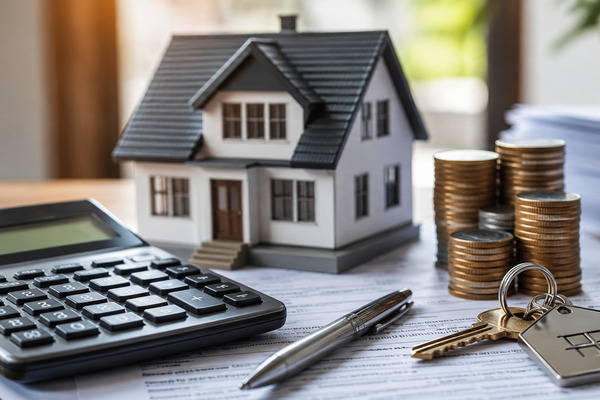
Whether you're looking for first time home buyer tips or just starting to explore the property market, congratulations! You're taking your first step into property ownership. This can be a great learning curve and an exciting experience.
Buying your first-home can be overwhelming. There's so much to consider, and the stakes are high. That's why we've gathered the most practical, battle-tested first time home buyer tips from people who've been through it.
Here are the 8 non-negotiable tips every first-time buyer needs to know plus a downloadable checklist to help you tick off every step.
Tip 1: First-Time Home Buyer Tips Start with a Pre-Purchase Property Inspection
This is the most important of all first-time home buyer tips. It came up more than any other from experienced buyers.
Never skip a professional property inspection. A pre-purchase inspection costs R2,000–R4,000 and could save you R50,000 in hidden defects. On older properties, it's not optional it's essential.
Here's the key: Add a clause to your Offer to Purchase stating that the offer is pending until a third-party inspection is complete, and nothing major outside of the known problems of the house is found.
How to use this tip:
- Hire a specialist like to inspect the property
- Make the inspection a suspensive condition in your OTP
- If major defects are found, you can walk away or renegotiate
- Look for: roof integrity, mould/dampness, electrical and plumbing issues, rising damp, structural weaknesses
One buyer's friends bought a house and discovered issues with building additions. Because they had a clause in their contract requiring plans to be up to date, the sellers had to not only amend the plans but pay for all changes to make everything compliant.
For a complete room-by-room breakdown of what to check, read our house viewing checklist.
Tip 2: Shop Around and Negotiate Your Interest Rate
Don't just accept the first offer the bank gives you. Get several offers from different banks and use them to negotiate until they can't take the interest rate any further down.
Why this matters: On a R1 million home loan, a 1% difference in interest rate could save you up to R10,000 per year possibly R150,000 over 20 years.
How to use this tip:
- Apply through a bond originator
- Submit your application to multiple banks simultaneously
- Use competing offers to negotiate a better rate
- Every 0.25% reduction matters
For more detail, see our guide on how to secure a better interest rate.
Tip 3: Use a Flexible/Access Bond and Overpay When You Can
When you pay off your home loan every month, the interest is paid first, and whatever is left goes towards reducing your capital amount.
Example: If your monthly repayment is R5,000 and your interest is R4,000, only R1,000 goes towards your capital. But if you can pay R7,000 instead of R5,000, R3,000 goes towards your capital meaning your capital gets smaller faster, your interest gets smaller, and your monthly payments reduce over time.
The access bond benefit: That extra money you've paid gets "stored" in your home loan account. Should you need it later, you can draw that money out for property renovations, repairs, or other needs.
How to use this tip:
- Ask your bank for a flexible/access bond
- Overpay when you have extra cash
- The interest you save is much higher than any savings account
- Worst case: you can withdraw the extra funds later
- Best case: you pay off your bond years earlier
Tip 4: Don't Use Your Home Loan for Cars or Renovations
This is a trap many first-time buyers fall into. Your home loan is for your home not for your car, not for renovations, not for furniture.
Why this matters: If you use your home loan to pay off your car, you're essentially paying off that car over 20 years. Imagine the interest you'd be paying on that car.
How to use this tip:
- Take the shortest mortgage term you can comfortably afford
- Don't roll other debts into your bond
- Don't take out a renovation loan as part of your bond
For a complete breakdown of what you should and shouldn't include in your bond, read our hidden costs of buying guide.
Tip 5: Check That Building Plans Are Up to Date
This is one of the most overlooked and potentially expensive issues.
Make sure the Offer to Purchase includes a clause requiring that the house plans are up to date and approved by the local municipality. Separate structures like cottages and garages must also be included.
What can go wrong: If you buy a property with unapproved additions, you could be forced to either demolish them or pay for retrospective approvals and compliance changes.
"My friends bought a house and because it was in the contract, when inspections found issues with the building additions, the sellers had to not only amend the plans but pay for the changes... This took 7 years and much frustration but no cost on their end."
How to use this tip:
- Ask for approved house plans before signing
- Ensure they match the actual structure
- If plans are missing, make approval a condition of sale
- The bank will likely ask for plans before final bond approval anyway
Tip 6: Never Buy the Nicest House on the Street
This is one of the golden rules of property investing.
The principle: Buy the worst house on the best street, not the best house in a bad street.
What happens when you ignore this: You can't get your money back out of the best house on a bad street. Anything you put into it will not be recovered when you sell.
One buyer's first house was the nicest on the street. Buyer after buyer said, "Love the house, not sure about the neighbourhood." They sold it for what they paid for it, after ten years and R10,000 in improvements.
The alternative: Their second house was the worst on the street. They put money into it and it appraised for R25,000 more than their total investment in less than 5 years.
How to use this tip:
- Look for the worst house in a good neighbourhood
- Buy a property you can improve
- Let the neighbourhood pull your property value up
Not sure where to start? See our most affordable suburbs guide with city-by-city data.
Tip 7: Request Compliance Certificates
The seller must provide various compliance certificates, including:
- Electrical compliance certificate
- Gas compliance certificate
- Electric fence certificate (if applicable)
- Roof compliance certificate (if not already covered)
If anyone tries to tell you you don't need them, either insist until you get them or walk away from that property.
How to use this tip:
- Request all certificates before transfer
- Ensure they're valid and up to date
- If missing, make them a condition of sale
For a full breakdown, see our compliance certificates guide.
Tip 8: If It's Sectional Title, Review the HOA Rules, Levies, and Special Levies
Sectional title properties come with additional considerations that can cost you thousands.
What to request:
- A copy of the full, unabridged body corporate / HOA rules
- Current levies
- Future levy increases (planned)
- Any current or planned special levies
What to ask about utilities:
- Who are you buying utilities from?
- If it's a reseller (developer or HOA), ask about service charge, network access charge, and ancillary charge per month
How to use this tip:
- Add levies to your monthly budget calculation
- Ask about special levies before you buy
- Understand what the levies cover (security, maintenance, insurance, etc.)
- Get a professional property inspection and make it a condition of your Offer to Purchase this is the most important of all first-time home buyer tips
- Shop around for the best interest rate—a 1% difference saves R150,000 over 20 years
- Use a flexible/access bond and overpay when you can
- Don't use your home loan for cars or renovations
- Check that building plans are up to date—make it a condition of sale
- Never buy the nicest house on the street—buy the worst in the best area
- Request all compliance certificates before transfer
- If sectional title, review HOA rules, levies, and special levies
These 8 first-time home buyer tips are the ones experienced buyers wish they'd known before their first purchase. Use them, and you'll avoid the most common and most expensive mistakes.